Showing posts with label Cells. Show all posts

Sunday, January 25, 2009

Announcements Week 19 (26 Jan.-01 Feb. 2009)

Grade 6
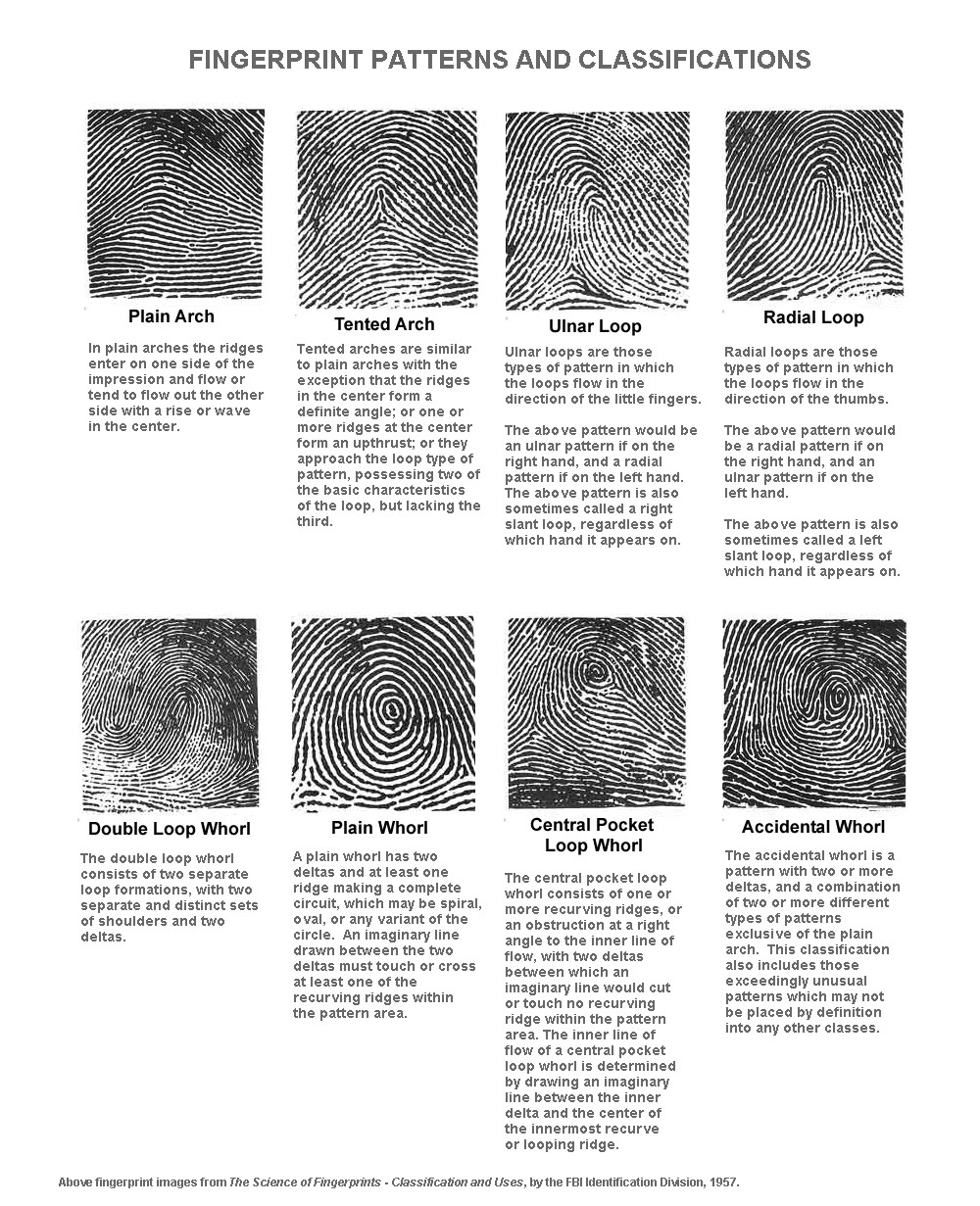
This is the last, last week for Fingerpints.

Grade 7
You will be making sure that your Development Sketchbooks are in complete order and that all art work done so far is mounted.

Grade 8
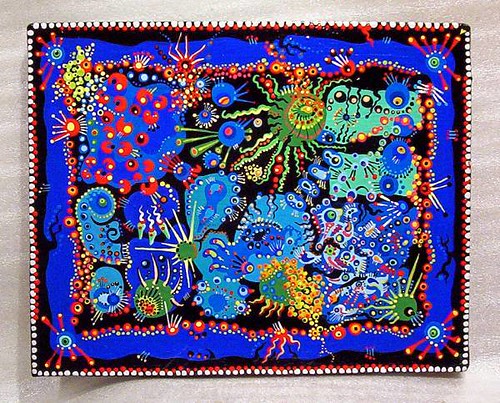
The Cells Project is finished
. This week you will be completing a self assessment of your painting. The Rubric can be found in Grade 8 Rubrics under the title Cells 6.

Sunday, January 18, 2009

Announcements Week 18 (19-25 Jan. 2009)

Continuing with what we were doing last week:

Grade 6 Fingerprint Paintings and Loose Ends
You will be completing your Fingerprint Paintings and wrapping up any loose ends in your Development Sketchbooks.

Grade 7 Development Sketchbooks, Mounted Work & New Projects
Making sure that your Development Sketchbooks are in complete order and that all art work done so far is mounted, as well as:

  • 701 - Complete the Bulletin Board Collages
  • 702 - Plan the Friendship Circle
  • 703 - Complete and Mount Pigeon Portraits

Grade 8 Cell Paintings
Deadline dates are passed. This week you will be writing an in-depth reflection of the Cells Project. See the Cells 5 posting.

Friday, January 16, 2009

Cells 5


To complete the Cell Project you will need to write a Reflection in your Development Sketchbooks. This will be your culminating task for this assignment. Next week you will complete the self-assessment rubric and then all grades will be final. The deadlines for the art work are passed, and so if you still need to complete your paintings, you will need to do that on your own time, no more class time will be given to the paintings.

Cell Project Reflection:
  1. Make a note of how long the Cell Project took (13 weeks) and comment on your time-management skills. Have you completed your Project on time? If yes - Explain how you managed to do that. If no - Explain why and what you are planning to do about it.
  2. Describe your final painting as if you are talking to somebody who has not seen it.
  3. Does your Painting successfully represent your Cell? Is the Story of your Cell evident?
  4. Do you think that your Painting is successful? Both from an Artistic and a Scientific point-of-view. If yes - Explain why. If no - Explain why
  5. Does your final Painting look like your Sketch Painting? If you have made adjustments and changes to your Sketch Painting record those now and explain why you made those adjustments.
  6. What were some of the challenges that you faced in this project?
  7. What were some of the successes you accomplished in this project?
  8. What have you learned from doing this project?

Sunday, December 14, 2008

Announcements Week 14 (15-21 Dec. 2008)

We only have one week and two days of school before we are on holiday again for the Winter Break, so this week you will all (Grades 6 - 8) be continuing on your Studio work for your various projects.

Here are some fascinating photographs of some of the smaller things in our world (click on the picture).


Thursday, November 27, 2008

Cells 4

Grade 8, now that most of you have started your Cell projects and are beginning to paint, I want you to start thinking about what your final painting will look like. Here are some examples of Cell art to get you imagining the possibilities some more...


Madonna con Clon, Dr. Hunter O'Reilly


For homework, and to get you thinking about the Science of it all, visit these two links: Cell City and Cells Alive! Be ready in class next week to ANSWER QUESTIONS about the homework.

Remember that Mr. Young is going to be looking for the following information in your final painting:
  1. Name: The Cell is accurately named and sourced
  2. What is it: Kingdom of life the Cell belongs to is identified. Where in the multi cellular organism it is found is identified. If it is unicellular, where the organism lives.
  3. What does it do and how: Explanation of how it performs its function
  4. What makes it a Cell: 5 features common to all cells are identified
  5. What makes it unique: 5 features unique to this Kingdom of cells or this specialized cell

Thursday, October 23, 2008

Cells 3


Your Cell Project is beginning to take some real shape in both Biology and Art class. Mr. Young has posted information for you on Moodle including a rubric clearly stating his expectations for the Science side of things.

I clarified for you in Art class this week what I expect you to be doing as you develop an idea for your painting. We have talked about understanding your Cell almost as if it were a personality and you have now pulled together its biography. Many of you have created a context for where to place your cell in a picture that will tell a "story" both factual and fictional about your chosen cell.

In your Development Sketchbooks you need to have the following for next class:
  1. Make sure your Cell is indeed a Cell...
  2. More images of your Cell (at LEAST 3) - you need to become as familiar with your cell, as if you were studying a person to paint their portrait.
  3. An explanation in your Development Sketchbook about where your cell can be found and what its function is.
  4. A story of your making that tells us where your cell is in your picture and what it is doing. Remember the examples that I shared using Erim's Goblet Cell and Laila's Strep Cell.
  5. Think about mixed-media techniques that you might like to employ. Some of you have already talked to me about paints, sewing, collage.
  6. Be ready next week to come to class and start this painting. You will complete a full sketch-painting in your Development Sketchbooks before you work on your final "canvas".


↑Click on this image to enlarge it so that you can read the text.

Thursday, September 25, 2008

Cells 2

How to set up your Cell Research in your Development Sketchbook
To start your cell research you will need to have the following elements in your Development Sketchbook. Remember to write everything in your own words.

  1. Write the date on the page (top-right-hand-corner).
  2. Give your page a title: Cell Research.
  3. Write an explanation of the assignment. For Example (do not copy this): We are studying cells in Biology and our first painting assignment in Art is to paint a large-format painting of a cell-structure. Ms. Lacoste has asked us to research three images of cell structure in our Development Sketchbooks. For the Art research we have to draw 2 of the cells twice, once just as a line drawing and the second time as a line drawing that we colour using Watercolour pencil. This assignment is to familiarize us with the structure of different cells as we learn about them and think about what our final painting will look like.
  4. Paste a minimum of 3 images into your books, label the type of cell they are and where you found the image, the source.
  5. Draw 2 of the cells two times. 1 line drawing + 1 Coloured for both cells = 4 sketches
  6. Create your own colour scheme for the cells you have drawn, do not copy the images you have downloaded, use them only as a reference.
  7. Remember to be creative in the way that you present your Research, use your pages well and think about the lay-out of your information. You want it to be interesting and fun to look at.

These images come from the work of David Goodsell who is a Molecular Biologist as well as an artist. I put them side-by-side so that you could compare the black and white line drawing to the coloured one.

Sunday, September 21, 2008

Cells 1

In Biology you are going to be studying cells. As an off-shoot of that in art your first painting this year is going to be inspired by cells. I have asked you in class to look at images of different cells to start getting an idea what that painting could look like.

Here are some pictures to get you thinking. Over the next few weeks, Mr. Young and I will be clarifying for you exactly what this assignment should entail, but right now for me you are gathering ideas and putting them into your Development Sketchbooks.


I will be checking your progress this week.